Kick with your feet
Deception Point“Kick with your feet” is the command Rachel Sexton’s mother uses to help save her from drowning as a child, and the remembered instruction Rachel acts on when she is trapped in the sinking Triton. Repeated across the two crises, it carries a specific lesson from one desperate rescue into another: when Rachel is sinking, survival depends on making her own body move.
The Childhood Rescue
The phrase first belongs to an episode Rachel remembers from childhood. She has fallen through ice and is sinking in the water, her skates weighing down her feet. Her mother lies spread-eagle on the ice to distribute her weight and reaches toward Rachel, shouting for her to fight and grab on. The scene makes the command practical rather than abstract: Rachel must kick while her mother pulls from above.
Rachel follows the instruction as best she can. Her body rises slightly, her mother catches hold, and the two actions work together. When her mother tells her again to kick, Rachel uses the last of her energy to drive herself upward with her skates. Her mother drags the soaking child out of the water and onto the snowy bank, where she collapses in tears. The phrase is thus tied to a rescue achieved through combined effort, not to Rachel’s effort alone.
Return in the Sinking Triton
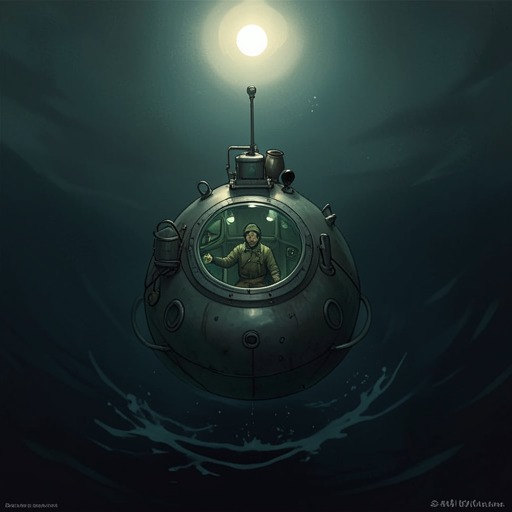
Years later, the instruction returns while Rachel is trapped inside the Triton, which is filling with water. The remembered voice of her mother is present in the blackness of the submarine; the words are not new advice so much as the resurfacing of a lesson Rachel already knows. Rachel has just forced her feet against the acrylic dome, breaking its seal and allowing the ocean to flood the cockpit. The opening gives her a possible way out, but also exposes her to the violent water and the sub’s plunge toward the bottom.
The phrase accompanies a second moment of action. As the cockpit fills, Rachel is thrown around and pinned by the force of the water. When Michael Tolland pulls her backward and turns her toward the way out, her mind fears he is taking her down, while her heart trusts his judgment. Her mother’s remembered command returns, and Rachel kicks as hard as she can. She and Tolland break the surface together. The words do not explain the danger away; they prompt Rachel to act within it.
Repetition and Meaning
The phrase’s force comes from its recurrence under materially different conditions. On the ice, Rachel’s mother can reach down and pull her to safety; in the submarine, the mother is dead and exists only in memory. The earlier rescue therefore supplies no literal rescuer in the later scene. It supplies a remembered voice and a bodily instruction that Rachel can still follow.
The repeated command also links motion with survival. In both scenes Rachel is submerged and losing the struggle against the water; in both, kicking is the action that helps move her toward life. Yet the later escape is not simply a replay of the childhood event. Rachel must first break the dome herself, and she escapes from the Triton with Tolland’s help. The phrase preserves the mother’s influence while allowing Rachel to act in a changed, more solitary crisis.
Narrative Role
The words bridge a memory and a present-tense emergency, making the past immediately consequential rather than merely explanatory. Their return gathers the childhood rescue into Rachel’s present action at the moment she might otherwise be overcome by panic and water. The scene gives the expression both an intimate source—the mother who once pulled Rachel from a hole in the ice—and a new outcome: Rachel’s kick helps her and Tolland reach the surface as the undersea eruption and vortex threaten everything above them.